
- Your cart is empty
- Continue shopping
-
Dr Prakul Rakesh
- Posted on
- Categories:Bio Enzyme, Eco Technology, Home Cleaning Solution, Sustainability
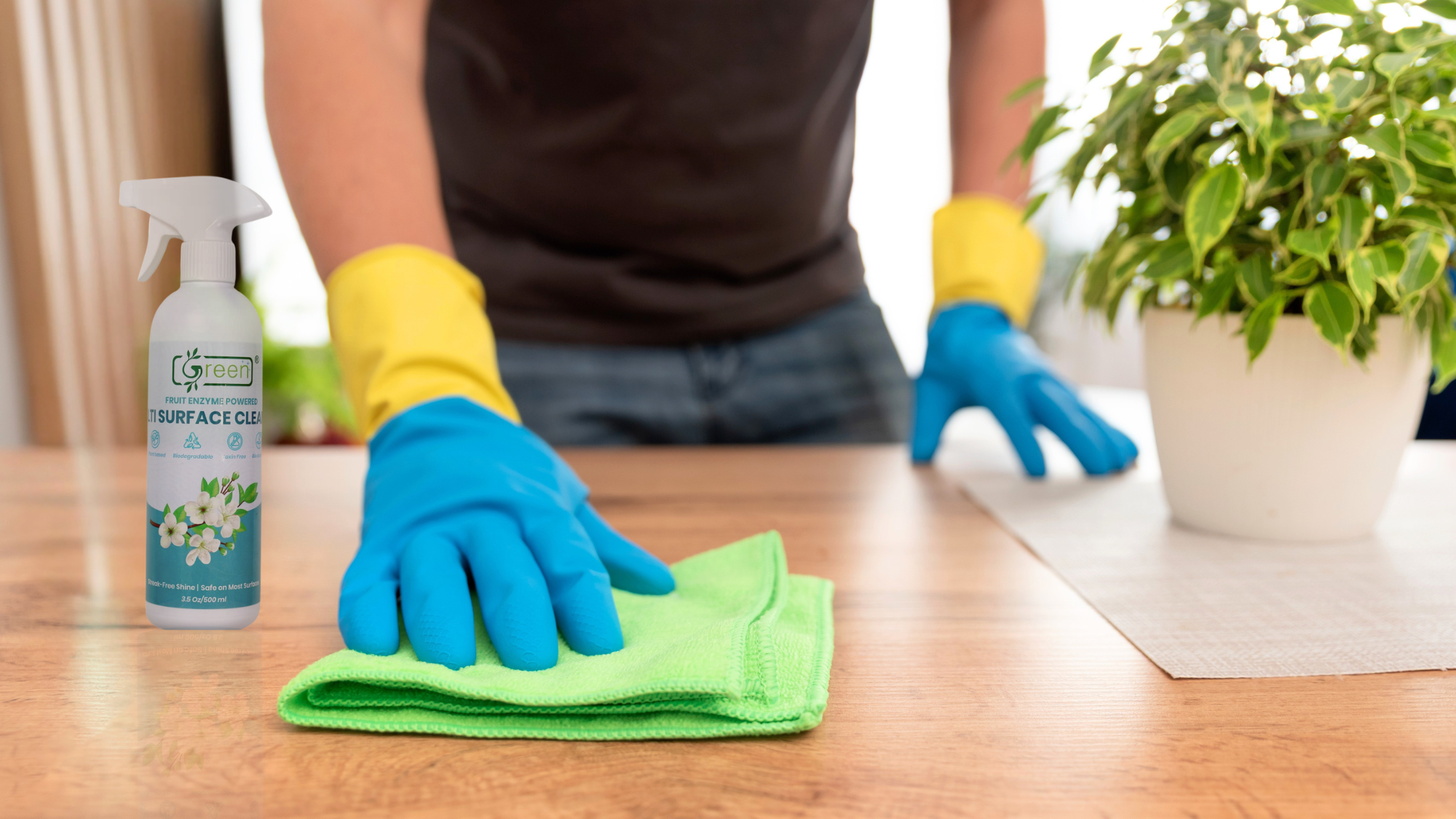
In recent years, the way we think about household cleaning has started to change. For decades, conventional cleaners dominated the market with promises of powerful stain removal and instant results. However, many of these products rely on harsh chemicals, strong acids, and synthetic ingredients that may not always align with the growing awareness around health, safety, and environmental responsibility.[1] As consumers become more eco-conscious, there is a clear shift toward green cleaning solutions that are safer for both people and the planet. This is why green cleaning is increasingly being recognized as the future of household care.
Green cleaning refers to the use of Fruit Enzyme Based Cleaner, eco-friendly, non-toxic, and biodegradable cleaning products that minimize harm to human health and the environment. These products are designed using sustainable ingredients and green chemistry principles, reducing reliance on harsh synthetic chemicals.
Green cleaning products typically focus on:
– Fruit Enzyme Based Cleaner
-Non-toxic formulations
– Biodegradable ingredients
– Plant-based cleaning agents
– Reduced environmental impact
– Safer indoor air quality
Instead of aggressive chemical reactions, green cleaners rely on smart chemistry inspired by nature.
The Problem with Conventional Cleaners
Many traditional household cleaners contain ingredients such as strong acids, chlorine-based compounds, and synthetic fragrances. While effective at removing stains and germs, these chemicals can contribute to several concerns:
– Indoor air pollution from chemical fumes
– Potential skin and eye irritation
– Environmental contamination through wastewater
– Long-term ecological impact
As awareness around sustainability and responsible consumption grows, many households are beginning to reconsider the products they bring into their homes.
Fruit Enzymes: Nature’s Cleaning Technology
One of the most promising developments in green cleaning is the use of fruit enzymes, often known as bio enzymes/Fruit Enzyme.
Bio enzymes are produced through the fermentation of fruit peels, natural sugars, and water. During this fermentation process, beneficial enzymes, organic acids, and natural cleaning compounds are formed.
These naturally derived components help to:
– Break down organic stains and grease
– Reduce unpleasant odors
– Support biodegradable cleaning action
– Utilize fruit waste that would otherwise be discarded
This approach transforms kitchen waste into a powerful cleaning resource, making fruit enzyme-based cleaners both eco-friendly and sustainable.
Eco-Friendly Cleaning for a Sustainable Future
Green cleaning is not only about replacing chemicals; it is also about adopting a sustainability mindset. Eco-friendly cleaners help reduce environmental impact in multiple ways:
– Lower chemical pollution in water systems
– Reduced exposure to toxic substances at home
– Better utilization of natural and renewable ingredients
– Encouragement of circular economy practices, such as using fruit waste
When consumers choose eco-friendly, non-toxic cleaning products, they contribute to a cleaner home and a healthier planet.
The Future of Cleaning Is “Green”
As environmental awareness grows, consumers are actively searching for the best cleaners that balance performance with sustainability. Green cleaning products built around fruit enzymes, bio enzymes, and plant-based ingredients are helping redefine how we think about household care. [2]
The future of cleaning is moving toward solutions that are:
– Effective
– Eco-friendly
– Non-toxic
– Sustainable
Fruit Enzyme “Green” cleaning is more than a trend—it represents a shift toward responsible living and smarter chemistry.
By choosing eco-friendly cleaning solutions, households can contribute to a future where clean homes and a healthy planet go hand in hand.
Reference
- Quan, X., Joseph, A., & Jelen, M. (2011). Green cleaning in healthcare: Current practices and questions for future research. Health Care Collaborative Paper Series, University of Illinois, Chicago School of P Public Health, 1-51.
- Aron, D. M. (2024). Sustainability in the Cleaning World: With Tomorrow in Mind. Bulletin of the Transilvania University of Braşov, Series VII: Social Sciences and Law, 17(1), 47-54.
