
- Your cart is empty
- Continue shopping
-
Dr Prakul Rakesh
- Posted on
- Categories:Bio Enzyme, Sustainability
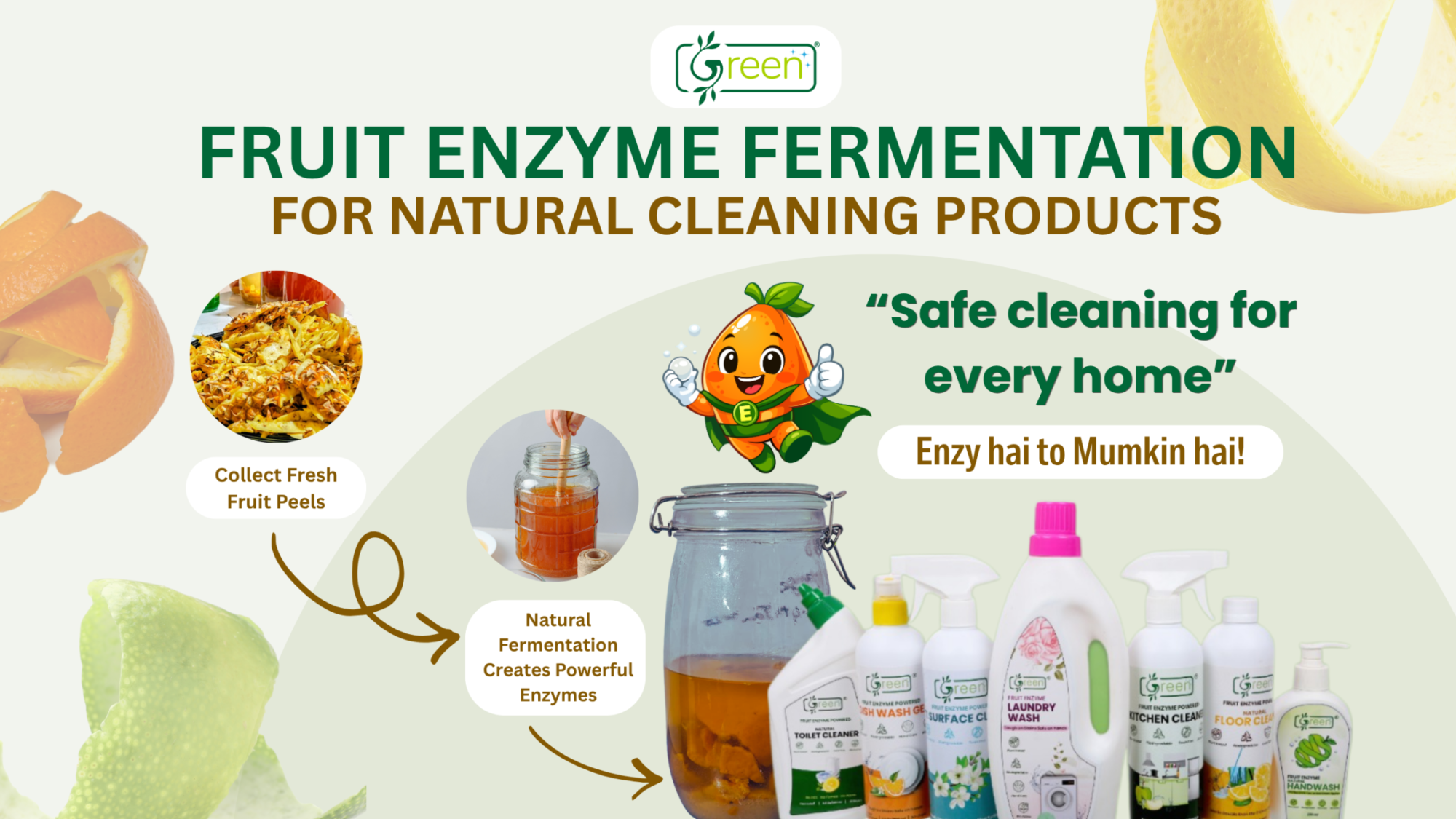
In recent years, more households are shifting toward natural cleaning products that are safer for families and better for the environment. Among these solutions, fruit enzyme cleaners are gaining popularity for their ability to clean effectively without relying on harsh chemicals.
But what exactly are fruit enzyme cleaners, and why are they becoming the future of sustainable home cleaning?
Let’s explore the science behind them.
What are Fruit Enzyme cleaners?
Fruit enzyme cleaners are natural cleaning solutions produced through the fermentation of fruit peels, sugar, and water. During fermentation, beneficial microorganisms break down organic compounds and produce powerful enzymes and organic acids. These enzymes work as natural catalysts that help break down stains, grease, odors, and organic waste.
Common fruit peels used include:
Orange peels
Green apple peels
Lemon peels
Pineapple peels
Other citrus fruit waste
This process converts fruit waste into a powerful, eco-friendly cleaning solution.
Enzymes work differently from traditional chemical cleaners. Instead of using corrosive chemicals, enzymes break down complex organic molecules into smaller, removable particles.
For example:
Type of Enzyme What It Breaks Down
Protease Protein stains
Lipase Grease and oils
Amylase Food residues
This biological process makes enzyme cleaners effective yet gentle, making them suitable for regular household use.
The Fermentation Process Behind Fruit Enzyme Cleaners
The effectiveness of fruit enzyme cleaners comes from a carefully managed fermentation process. At Green Natural Products, the process typically involves:
1. Collection of fruit peels
Fruit waste is collected and prepared for fermentation.
2. Washing and preparation
Peels are cleaned to remove contaminants.
3. Controlled fermentation
Peels are fermented with natural sugars to allow enzymes to develop.
4. Quality testing
Samples are regularly tested to ensure consistency and performance.
5. Blending with plant-based surfactants
Natural surfactants enhance cleaning efficiency.
6. Bottling and packaging
The final product is filled, labeled, and prepared for consumers.
This process transforms organic waste into sustainable cleaning power.
Why Fruit Enzyme Cleaners Are Better for Your Home
Traditional cleaners often contain chemicals such as chlorine, ammonia, and synthetic fragrances. These ingredients can release volatile organic compounds (VOCs) that impact indoor air quality.
Fruit enzyme cleaners offer several advantages:
Safer for Families- They are generally gentler on skin and safer for households with children and pets.
Eco-Friendly- They help reduce chemical pollution and plastic waste while promoting sustainable cleaning practices.
Biodegradable- Natural enzymes break down easily without harming the environment.
Odor Neutralization-Enzymes break down odor-causing organic molecules instead of masking them.
The Circular Economy Behind Fruit Enzyme Cleaners- Fruit enzyme cleaners are also an example of the circular economy in action.
Instead of sending fruit peels to landfills where they produce methane emissions, they can be upcycled into valuable cleaning solutions.
This approach helps:
Reduce fruit waste
Minimize landfill impact
Promote sustainable manufacturing
Why More Households Are Switching to Enzyme-Based Cleaning
Consumers today are increasingly aware of the impact that everyday products have on health and the environment.
As a result, enzyme-based cleaners are becoming popular because they:
Deliver effective cleaning
Reduce chemical exposure
Support sustainable living
Experience the Power of Nature-Based Cleaning
At Green Natural Products, we transform citrus fruit waste into powerful enzyme-based cleaners designed for modern homes.
Our mission is simple:
Create cleaning solutions that are effective, safe, and environmentally responsible.
If you’re looking for a natural alternative to chemical cleaners, fruit enzyme cleaners are a smart place to start
1. Eco-enzyme as disinfectant: a systematic literature review
